

Guide for bird knowledge
Guide for bird knowledge
Guide for budgies
Show all answers
Hide all answers
-
How do parakeets behave and what do I need to bear in mind when acclimatizing them?
Behavior
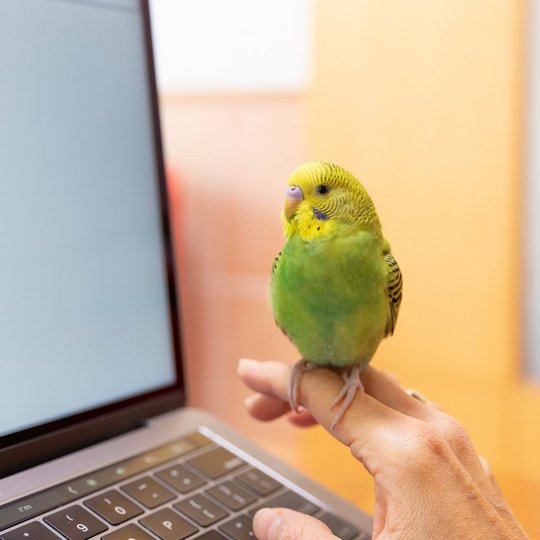
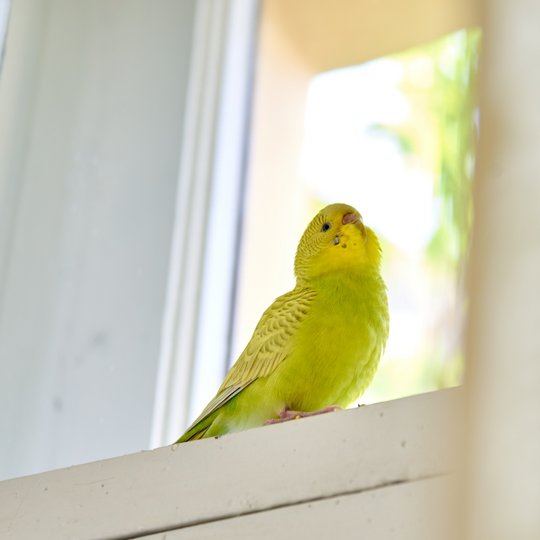
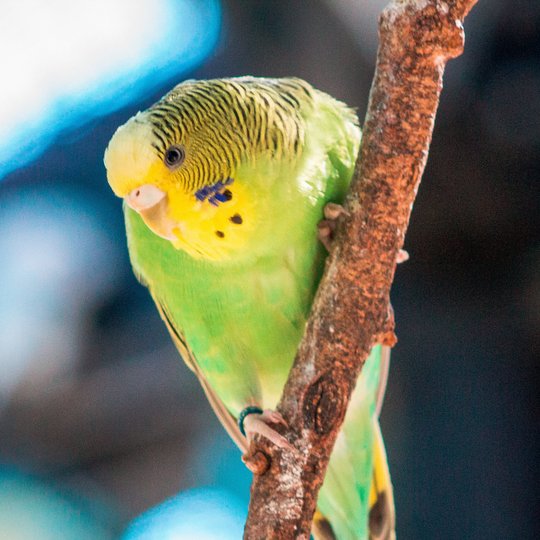
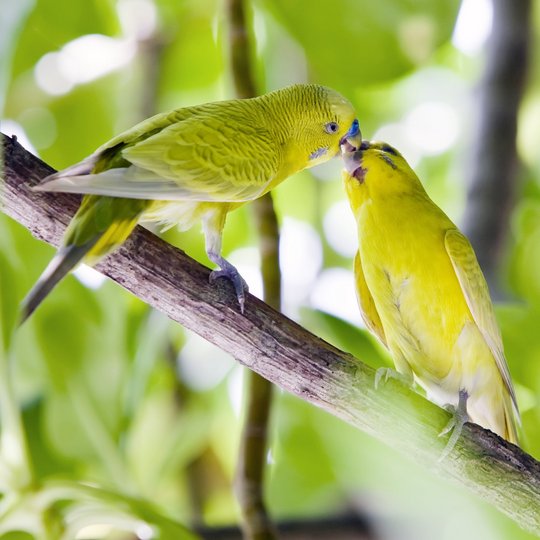
Budgerigars are naturally very lively, sociable and curious animals. As flock birds, they have a pronounced social behavior and are very sociable. They show this behavior not only towards their conspecifics - they also accept people who show patience and empathy with them as friends. This makes our budgies real "family birds".
The new "family member"
Budgies need a little peace and quiet for the first few days to get used to their new surroundings. The bird house should therefore be set up before the birds are put in. If two birds need to get used to each other, proceed slowly and carefully and observe the birds closely at first. After a few days, the budgies will usually sit relaxed on the perch when you come near. It is important that the birdhouse is in an elevated position and that you do not approach it from above - as this would frighten the birds.
How budgies become tame
After the acclimatization phase, the birds can be slowly accustomed to human hands. The best way to do this is with a treat, such as a Kräcker®. It is important that the parakeets have already "acquired a taste for it". If you then hold the nibbling stick calmly in the cage, the first bird will probably peck at it with relish after a short hesitation. This process should be repeated regularly and the bird will soon seek contact with "its" human of its own accord.
Budgerigars have an innate instinct to imitate. They often imitate certain noises in their environment all by themselves. Sometimes it is also possible to teach the animals to speak a few words. A short sentence or a melodious name, for example, which is spoken several times in a steady tone of voice and repeated regularly, is suitable.
-
What do I need to consider when buying and equipping parakeets?
As a flock bird, budgerigars have a strong need for companionship with other birds of the same species. It is therefore only recommended today to keep at least two budgies. A few preparations should be made before acquiring one.
Checklist for the initial equipment:
- A spacious bird house with cross bars for climbing
- Perches of different sizes for exercising their feet
- Unsprayed natural branches for climbing
- Bathing house for daily refreshment
- Bird sand, for example Premium SANDY with lime and important minerals
- Toys to keep them occupied
- Feeding bowl or feeder, filled with staple food such as Parakeet pearl®
- Bird drinker with fresh drinking water or Vita Fit® Bird Potion®
- Mineral stone, e.g. Vita Fit® Mineral or Vita Fit® Sepia bowls for mineral supplementation and beak care
- Kräcker® for beak care and species-appropriate variety
By the way: The bird sand is not only used for hygiene in the bird house, but is also important for digestion! Budgerigars pick so-called "stomach pebbles" and "grit" out of the sand. The stomach pebbles help to grind the grain food in the gizzard, as birds have no teeth and swallow a lot of food almost whole. The grit (calcium carbonate) also helps the bird to absorb calcium.
Tips for buying budgerigars
Budgerigars can be bought in almost any pet store or directly from the breeder. Or you can ask at your local animal shelter: Young budgies generally become tame a little quicker, but older birds, e.g. from an animal shelter, are of course also happy about a new home.
You can recognize healthy birds by
- their lively behavior
- smooth plumage
- clear eyes
- a clean (nose) wax skin
- a clean anal region
The right location for the bird's home
Budgerigars love to socialize and can be kept where the rest of the family spends most of their time, for example in the living room. A bright and sheltered corner that offers them a good view is the ideal location for the spacious birdhouse.
- Budgerigars do not tolerate draughts and heat.
- There are many dangers lurking in the kitchen (hot hobs, dishwater etc.). This place is also not recommended.
- The distance to electrical appliances such as televisions, microwaves, PCs, etc. should be at least three meters, as birds can also perceive frequencies that we humans cannot hear.
-
How do I feed my parakeets correctly?
The basics of nutrition
In their native Australia, budgerigars often live under harsh conditions, heat, drought and a lack of food. The flocks of budgerigars then fly long distances to find suitable feeding and breeding grounds.
Their basic diet consists of seeds from different types of plants, especially grasses, fruits and fresh green grasses and herbs. Scientific studies have shown that birds have a very varied diet.Our budgies' diet should therefore also be modeled on nature's varied food supply. Vitakraft offers a varied and balanced range of products for a species-appropriate diet for budgerigars.
The types of food
Staple food:
A staple food, such as Parakeet Pearl®covers the basic nutritional requirements of budgerigarsKräcker®:
The delicious Kräcker® fulfill several functions at once: The birds have to work for their food just like in nature. This is good against boredom and keeps the parakeets busy in a species-appropriate way. Pecking also promotes beak careNature snacks:
Healthy treats such as VITA NATURE®which support the birds' natural behavior, e.g. pecking seeds from natural millet cobsTreats:
Snacks such as the Bisquiti® provide variety and reward and are a valuable aid in taming and habituationNutritional supplements:
Supplements such as Vita Fit® Mineral,iodine-rapid pearls or Vita Fit® Multivitamin serve to strengthen and build up the body. They help to cover requirements in special life situations, e.g. during growth, after illness, in particularly active animals, during breeding, etc.Feeding tips
- Remove the empty grain husks from the food bowl or dispenser every day, fill up with new food
- Kräcker®or fresh twigs from unsprayed fruit trees for species-appropriate nibbling and pecking - for natural activity and beak work
- Feed a varied diet
- Provide fresh drinking water daily
- Offer fresh fruit
By the way: Bird sand is not only good for hygiene in the bird house, but is also important for digestion! Budgerigars pick so-called "stomach pebbles" and "grit" out of the sand. The stomach pebbles help to grind the grain food in the gizzard, as birds have no teeth and swallow a lot of food almost whole. With the grit (calcium carbonate), the bird also absorbs lime.
-
How do I keep and care for a parakeet?
Flying? As often as possible!
Flying freely in the room not only increases their zest for life, it also stimulates the budgies' circulation and strengthens their muscles. It is therefore simply a "must" for the birds! Budgerigars often look for a favorite spot when flying freely - for example, they like to stay on a self-built "bird tree" so that they can observe everything closely from an elevated position. The ideal place to rest, climb and play! Don't forget: Be sure to close the windows and doors before "taking off".
Good night!
In the evening, budgies go to their roosts. To sleep, they fluff themselves up a little, turn their heads on their backs and sometimes put one leg up. They tuck their beak deep into their back feathers.
Grooming
Budgerigars groom their feathers several times a day, as they can only stay airworthy and protected from the cold and wet if their plumage is intact. Human assistance with grooming is not normally necessary.
Moulting
The need for vitamins, minerals and nutrients is particularly high during the moulting period. With the moulting aid for parakeets and exotic birds or the tasty Kräcker®- especially for moulting - the bird gets additional nutrients that it urgently needs during this time.
Cleaning the budgie home
Depending on the number of birds and the size of the bird house, the bird sand should be replaced at least once or twice a week. The bottom tray should also be hot-washed once a week. The perches and toys should also be wiped down with a brush or damp cloth and the food and water bowls thoroughly cleaned with hot water.
Once a month, it's time for a big clean: the grid in the bath or shower tray should also be given a warm shower. But please do not use strong household cleaners!
Care on vacation
Before you go on vacation, you should look around for a carer who will look after your budgies every day. If you can't find a vacation home among your friends, you can also take your budgies to a breeder or boarding kennel.
Guide for canaries
Show all answers
Hide all answers
-
What do I need to consider when purchasing and equipping canaries?
Tips for buying canaries
The canary is sociable, but lives in a rather loose flock. If it is alone, it will easily feel lonely - so it is better to buy two birds at the same time. Two hens or a pair are best suited for keeping together. However, several males can also be kept in a sufficiently large aviary.
Cock or hen?
Canaries can be bought in almost any pet store or directly from the breeder. In technical jargon, the males are called "cocks" and the females "hens". Externally, it is almost impossible to tell them apart. However, one way of identifying the sex is the roosters' highly developed singing ability.
Healthy animals can be recognized by
- their lively behavior
- smooth plumage
- clear eyes
- a clean beak
- a clean anal region
Checklist for the initial equipment:
- A spacious bird house with cross bars for climbing
- Perches of different sizes for exercising their feet
- Unsprayed natural branches for climbing
- Bathing house for daily refreshment
- Bird sand, for example Premium SANDY with lime and important minerals
- Feeding bowls or feeders filled with staple food such as Canary Pearl®
- Bird drinker with fresh drinking water or Vitakraft Vita Fit® Bird Drinker
- Mineral stone, e.g. Vita Fit® Mineral or Vita Fit® Sepia bowls for mineral supplementation and beak care
- Kräcker® for beak care and species-appropriate variety
The canary home
A nice, spacious bird house with lots of opportunities for sitting and hopping is ideal for canaries. Natural branches should also be included. As branches are not always horizontal in nature, some perches should also be placed at an angle in the canary home - an important training exercise for the foot muscles.
The right place for the canary house
Canaries feel at home in a quiet, bright place. It is best to place the bird house at eye level: this way, the birds always have a good overview, which gives them a sense of security.
- Canaries do not tolerate draughts or heat. They are also sensitive to strong temperature fluctuations.
- The kitchen is also not a recommended place, as hot hobs and dishwater etc. are major sources of danger for canaries.
- The distance to electronic devices such as televisions, microwaves, PCs etc. should be at least three meters, as birds also perceive frequencies that we humans cannot hear.
-
How do canaries behave and what do I need to bear in mind when acclimatizing them?
Flying? As often as possible!
The lively canary needs the opportunity to fly freely around the room as often as possible. This is not only important for his zest for life, but also for the health of his muscles and circulation. However, you should wait a while before allowing the canary to fly freely for the first time until it has become accustomed to its new home.
Good night!
Canaries have a fixed sleeping place in their home, which they go to in the evening. When sleeping, the canary fluffs itself up a little, turns its head backwards and sometimes pulls up one leg. The beak is tucked deep into the back feathers.
Grooming
The canary grooms its feathers intensively several times a day. It does not need human assistance with grooming. However, it should be given the opportunity to bathe daily, which is particularly important during moulting.
Moulting
The need for vitamins, minerals and nutrients is particularly high during the moulting period. With the moulting aid for canaries and forest birds or the tasty Kräcker®- especially for moulting - the bird receives additional nutrients that it urgently needs during this time.
Beak care
To care for the beak, the canary needs a sharpening stone, e.g. Vita Fit® Mineral or Vita Fit® Sepia Bowls from Vitakraft.
Cleaning the bird house
Depending on the number of birds and the size of the bird house, the bird sand should be replaced up to twice a week. Once a week, the bottom tray is washed out hot and fresh bird sand is filled in. The perches and other accessories, e.g. food and water bowls, should also be thoroughly cleaned with hot water.
Once a month, it's time for a big clean: the grid in the bath or shower tray should also be given a warm shower. But please do not use strong household cleaners!
-
How do I keep and care for canaries?
Flying? As often as possible!
The lively canary needs the opportunity to fly freely around the room as often as possible. This is not only important for his zest for life, but also for the health of his muscles and circulation. However, you should wait a while before allowing the canary to fly freely for the first time until it has become accustomed to its new home.
Good night!
Canaries have a fixed sleeping place in their home, which they go to in the evening. When sleeping, the canary fluffs itself up a little, turns its head backwards and sometimes pulls up one leg. The beak is tucked deep into the back feathers.
Grooming
The canary grooms its feathers intensively several times a day. It does not need human assistance with grooming. However, it should be given the opportunity to bathe daily, which is particularly important during moulting.
Moulting
The need for vitamins, minerals and nutrients is particularly high during the moulting period. With the moulting aid for canaries and forest birds or the tasty Kräcker®- especially for moulting - the bird gets additional nutrients that it urgently needs during this time.
Beak care
To care for the beak, the canary needs a sharpening stone, e.g. Vita Fit® Mineral or Vita Fit® Sepia Bowls from Vitakraft.
Cleaning the bird house
Depending on the number of birds and the size of the bird house, the bird sand should be replaced up to twice a week. Once a week, the bottom tray is washed out hot and fresh bird sand is filled in. The perches and other accessories, e.g. food and water bowls, should also be thoroughly cleaned with hot water.
Once a month, it's time for a big clean: the grid in the bath or shower tray should also be given a warm shower. But please do not use strong household cleaners!
-
How do I feed my canaries correctly?
The basics of nutrition
On the Canary Islands, the home of our canaries, the birds' basic diet consists of the seeds of countless plant species. There is also fresh green grass and herbs as well as berries and fruit. The diet for pets should be based on what nature has to offer.
Vitakraft's varied nutritional program is precisely tailored to the special needs of canaries - the best prerequisite for a long and healthy bird life. In accordance with the natural nutritional requirements, Vitakraft food contains selected premium seeds from the canary's native habitat as well as vital nutrients and nutrients.
The types of food
Staple food:
A staple food, such as Canary Pearl® covers the basic nutritional requirements of canariesKräcker®:
The delicious Kräcker® fulfill several functions at once: The animals have to work for their food just like in the wild. This is good against boredom and keeps the canaries busy in a species-appropriate way. Pecking also promotes beak careNature snacks:
Healthy treats such as VITA NATURE® which support the natural behavior of the birds, e.g. when pecking the seeds from the natural millet cobsTreats:
Snacks such as the Bisquiti® provide variety and reward and are a valuable aid in taming and habituationNutritional supplements:
Supplements such as Vita Fit® Mineral or Vita Fit® Multivitamin serve to strengthen and build up the body. They help to cover requirements in special life situations, e.g. during growth, after illness, for particularly active animals, during breeding, etc.Feeding tips
- Remove the empty grain husks from the food bowl or dispenser every day, fill up with new food
- Kräcker® for species-appropriate nibbling and pecking - for natural activity and beak work
- Feed a varied diet
- Provide fresh drinking water daily
- Offer fresh fruit
Guide for parrots
Show all answers
Hide all answers
-
What do I need to bear in mind when acclimatizing parrots?
Behavior
Parrots are among the most intelligent and highly developed birds. The more you spend time with them, the more trusting they become. If you know their needs and have adapted to them, a close friendship will soon develop.
The new "family member"
In the first few days, a bird needs a lot of rest to get used to its new surroundings. In order to disturb it as little as possible, the bird's home should be well prepared. You can stay close to the bird after it has moved in and keep talking to it in a gentle voice. However, it is better to give it at least one day's rest first.
You can tell from its behavior whether the bird has already settled in: If it picks a few grains from the bowl or cleans itself extensively, it already feels at home in its new home.
As parrots are sociable animals that should be kept in the company of conspecifics, birds that are strangers to each other will need some time to get used to each other. A little patience is required here. However, the final choice of partner is up to the birds.How parrots become tame
After about a week, the new housemate will have settled in somewhat. Now you can gradually familiarize it with the human hand. The best way to do this is with a treat, such as a Kräcker® Hold the snack stick calmly in the cage and talk to the bird in an enticing manner. After a short time, the bird will usually approach curiously to nibble on the treat. This process should be repeated regularly - in this way the animal learns that the hand only brings it good things.
Teaching
Some parrot species imitate the sounds of their environment and their partners. This natural imitation behavior is particularly pronounced in grey parrots, but other species such as macaws, cockatoos, amazons and lorises can also learn to speak very well.
If you want to teach your birds certain words or short sentences, you should say something to them every day, e.g. names or simple sentences. In the late afternoon, the birds are particularly attentive and receptive - this can usually be recognized by the fact that they are in a "chattering mood" all by themselves. Interest and attentiveness are shown when the bird tilts its head and listens with great interest. It usually speaks its first word much later and usually when you least expect it. -
How do I feed parrots correctly?
The basics of nutrition
Parrots are mainly found in tropical and subtropical regions, with most species originating from South America and Australia. The main food of most parrots are seeds and grains of many different plants. In addition, they often find fruits, vegetables and fresh green grasses and wild herbs. The living conditions, and above all the food supply, naturally differ significantly from area to area - and the birds have adapted to the food supply of their respective homelands in the course of evolution. An optimal and species-appropriate diet should therefore be based on the birds' natural habitat.
Vitakraft's varied nutritional program is precisely adapted to the nutritional and physiological needs of parrots: Sun-ripened premium seeds from the bird's native habitat, enriched with essential nutrients and nutrients, guarantee an optimal and species-appropriate diet - for a healthy and long life.The feed types
Staple food:
A staple food, such as Premium Menu for parrots, covers the birds' basic nutritional requirementsKräcker®:
The delicious Kräcker® fulfill several functions at once: The animals have to work for their food just like in nature. This is good against boredom and keeps the parrots busy in a species-appropriate way. Pecking also promotes beak careNature snacks:
Healthy treats such as VITA NATURE® which support the birds' natural behavior, e.g. when pecking seeds from natural millet cobsTreats:
Snacks such as the Bisquiti® provide variety and reward and are a valuable aid in taming and habituationFood supplements:
Supplements such as Vita Fit® Mineral Maxi or Vita Fit® Multivitamin serve to strengthen and build up the body. They help to cover requirements in special life situations, e.g. during growth, after illness, in particularly active animals, during breeding, etc.Feeding tips
- Change the food daily or remove the empty grain husks from the food bowl or dispenser and refill with new food
- Kräcker® for species-appropriate nibbling and pecking - for natural activity and beak work
- Feed a varied diet
- Provide fresh drinking water every day
- Offer fresh fruit and juicy greens
-
How do I keep & care for parrots properly?
The bird house
To keep our parrots healthy and happy, a species-appropriate bird home is extremely important in addition to a varied, healthy diet. Basically, a bird house can never be too big. In any case, it should offer enough space for the birds to flutter, climb and jump - because this keeps them fit and healthy.
The "crooked beaks" like to perform daring tricks on branched natural branches. That's why they need lots of different climbing opportunities in their spacious aviary. But toys are also very popular: the swing, for example, is very popular and often becomes their favorite place to relax.Cleaning the bird house
Depending on the size of the bird house and the number and size of the birds, the sand should be changed about once or twice a week. The floor should also be hot-washed once a week. The perches and toys should also be wiped down with a brush or damp cloth and the food and water bowls thoroughly cleaned with hot water.
Once a month, it's time for a big clean, including a hot rinse of the lattice. But please avoid using strong household cleaners!Body care
Parrots groom their feathers thoroughly several times a day. They also enjoy an occasional bath. As a rule, they do not need human help with grooming.
Beak care
A sharpening stone and a strong natural branch should always be available to the parrot. Sharpening is an important part of beak care. With the mineral stone Vita Fit® Mineral , vital minerals, trace elements and natural lime are absorbed at the same time.
Claw care
If the bird has rough natural branches with a large diameter in its home, the claws will wear off naturally. However, if the claws become too long, they must be shortened from time to time. Your pet shop, breeder or vet will be happy to show you how to do it properly.
Moulting
The need for vitamins, minerals and nutrients is particularly high during the moulting period. With the moulting aid for large parakeets and parrots or the tasty Kräcker®- especially for moulting - the bird receives additional nutrients that it urgently needs during this time.
-
What do I need to consider when buying and equipping parrots?
Parrots are sociable animals and it is not least because of their great trusting nature that they are so popular. They enjoy it when you talk and play with them a lot! If you pay attention to a few important points before the birds move in, nothing stands in the way of a long-lasting friendship.
Checklist for the initial equipment:
- A spacious bird house with cross bars for climbing
- Perches with different circumferences for exercising their feet (at least thick enough so that the bird cannot reach all the way around them)
- Unsprayed natural branches for climbing
- Toys to keep them occupied (made of material suitable for parrots)
- Bathing house for daily refreshment
- Bird sand, for example SANDY parrot sand with shell grit and stomach pebbles
- Feeding bowl or feeder, filled with staple food such as Vitakraft African or Amazonian
- Bird drinker with fresh drinking water or Vita Fit® bird drink
- Mineral stone, e.g. Vita Fit® Sepia shells for mineral supplementation and beak care
- Kräcker® for beak care and species-appropriate variety
The right place for the bird house
Birds love company - a bright, sheltered corner in the living room can therefore be the ideal location for the bird house. From an elevated position, the birds can keep a close eye on what is going on around them. Spacious outdoor or indoor aviaries are also particularly attractive. Or even a separate bird room, especially for the very large parrot species.
- Birds are sensitive to draughts and bright sunlight, so the bird house should not be too close to the window. Our pet birds also do not tolerate extreme temperature fluctuations.
- There are many dangers lurking in the kitchen, e.g. hot hobs and toxic cleaning agents.
- Parrots like fresh air. In summer, you can set up an aviary in a corner of the balcony or garden that is protected from the sun and wind.
Guide for parakeets
Show all answers
Hide all answers
-
What do I have to consider regarding the behavior and acclimatization of large parakeets?
Behavior
Large parakeets are among the most intelligent and highly developed birds. The more you spend time with them, the more trusting they become. If you know their needs and have adapted to them, a close friendship will soon develop.
The new "family member"
In the first few days, a bird needs a lot of rest to get used to its new surroundings. In order to disturb it as little as possible, the bird's home should be well prepared. You can stay close to the bird after it has moved in and keep talking to it in a gentle voice. However, it is better to give it at least one day's rest first.
You can tell from its behavior whether the bird has already settled in: If it pecks a few grains out of the bowl or preens itself extensively, it already feels at home in its new home.
As large parakeets are sociable animals that should only be kept in the company of conspecifics, birds that are strangers to each other will initially need some time to get used to each other. The animals should be observed closely during this process.How large parakeets become tame
After about a week, a new animal will have settled in somewhat. Now you can gradually familiarize it with the human hand. The best way to do this is with a treat, such as a Kräcker® Hold the snack stick calmly in the cage and talk to the bird in an enticing manner. After a short time, the bird will usually approach curiously to nibble on the treat. This process should be repeated regularly - in this way the animal learns that the hand only brings it good things.
Teaching
Some large parakeet species imitate the sounds of their environment and their partners. This natural imitation behavior is particularly pronounced in larger parrot species, but large parakeets can also learn to speak very well.
If you want to teach your birds certain words or short sentences, you should say something to them every day, e.g. names or simple sentences. In the late afternoon, the birds are particularly attentive and receptive - this can usually be recognized by the fact that they are in a "chattering mood" all by themselves. Interest and attentiveness are shown when the bird tilts its head and listens with great interest. It usually speaks its first word much later and usually when you least expect it.
The same applies to a melody or recurring ambient sounds. The animals will eventually pick up on what they hear frequently and incorporate it into their own song. Cockatiels are particularly talented at this. -
How do I feed a large parakeet correctly?
The basics of nutrition
Large parakeets are generally referred to as small, long-tailed parrot birds that are mainly found in tropical and subtropical regions of Australia and South America. The main food of most species is seeds and grains. But they also like to eat other parts of plants, e.g. fruit, vegetables and fresh green grasses and wild herbs. The living conditions, and above all the food supply, differ significantly from area to area - and the birds have adapted to the food supply of their respective habitats over the course of evolution. In principle, however, the food spectrum is always quite varied.
Vitakraft's varied nutritional program is precisely adapted to the nutritional and physiological needs of large parakeets: Sun-ripened premium seeds, enriched with essential nutrients and nutrients ensure an optimal and species-appropriate supply - for a healthy and long life.The feed types
Main feed:
A main feed, such as Premium Menu for large parakeets, for example, covers the birds' basic nutritional requirementsKräcker®:
The delicious Kräcker® fulfill several functions at once: The birds have to work for their food, just like in the wild. This is good against boredom and keeps the parakeets busy in a species-appropriate way. Pecking also promotes beak careNature snacks:
Healthy treats such as VITA NATURE®which support the birds' natural behavior, e.g. pecking seeds from natural millet cobsTreats:
Snacks such as Fruit Cocktail provide variety and reward and are a valuable aid in taming and habituationFood supplements:
Supplements such as Vita Fit® Mineral or Vita Fit® Multivitamin serve to strengthen and build up the body. They help to cover requirements in special life situations, e.g. during growth, after illness, in particularly active animals, during breeding, etc.Feeding tips
- Change the food daily or remove the empty grain husks from the food bowl or dispenser and refill with new food
- Kräcker®for species-appropriate nibbling and pecking - for natural activity and beak work
- Feed a varied diet
- Provide fresh drinking water daily
- Offer fresh fruit and juicy greenery
-
How do I keep and care for a large parakeet properly?
The bird house
To keep our large parakeets healthy and happy, a species-appropriate bird home is extremely important in addition to a varied, healthy diet. Basically, a bird house can never be too big. In any case, it should offer enough space for the birds to fly, climb and jump - because that keeps them fit and healthy.
The little curly beaks like to perform daring tricks on branched natural branches. That's why they need lots of different climbing opportunities in their spacious aviary. But toys are also very popular: the swing, for example, is very popular and often becomes their favorite place to relax.Cleaning the bird house
Depending on the size of the bird house and the number and size of the birds, the sand should be changed about once or twice a week. The floor should also be hot-washed once a week. The perches and toys should also be wiped down with a brush or damp cloth and the food and water bowls thoroughly cleaned with hot water.
Once a month, it's time for a big clean, including a hot rinse of the lattice. But please avoid using strong household cleaners!Body care
Large parakeets groom their plumage thoroughly several times a day. They also enjoy an occasional bath. As a rule, they do not need human help with grooming.
Beak care
A sharpening stone and a strong natural branch should always be available to the parakeet. Sharpening is an important part of beak care. With the mineral stone Vita Fit® Sepia shells mineral stone provides vital minerals, trace elements and natural lime at the same time.
Claw care
If the birds have rough natural branches with a large diameter in their home, their claws will wear off naturally. However, if the claws become too long, they need to be shortened from time to time. Your pet shop, breeder or vet will be happy to show you how to do it properly.
Moulting
The need for vitamins, minerals and nutrients is particularly high during the moulting period. With the moulting aid for large parakeets and parrots or the tasty Kräcker®- especially for moulting - the bird gets additional nutrients that it urgently needs during this time.
-
What do I need to consider when buying and equipping a large parakeet for the first time?
Large parakeets are sociable animals and it is not least because of their great trusting nature that they are so popular. They enjoy it when you talk and play with them a lot! If you pay attention to a few important points before the birds move in, nothing stands in the way of a long-lasting friendship.
Checklist for the initial equipment:
- A spacious bird house with cross bars for climbing
- Perches with different circumferences for exercising their feet (at least thick enough so that the bird cannot reach all the way around them)
- Unsprayed natural branches for climbing
- Toys to keep them occupied
- Bathing house for daily refreshment
- Bird sand, for example SANDY with shell grit and stomach pebbles
- Feeding bowl or feeder, filled with staple food such as Vitakraft Australian
- Bird drinker with fresh drinking water or Vita Fit® bird drinker
- Mineral stone, e.g. Vita Fit® Mineral for mineral supplementation and beak care
- Kräcker® for beak care and species-appropriate variety
The right place for the bird house
Birds love company - a bright, sheltered corner in the living room can therefore be the ideal location for the birdhouse. From an elevated position, the birds can keep a close eye on what is going on around them. Spacious outdoor or indoor aviaries are also particularly attractive.
- Birds are sensitive to draughts and bright sunlight, so the bird house should not be too close to a window. Our pet birds also do not tolerate extreme temperature fluctuations.
- There are many dangers lurking in the kitchen, e.g. hot hobs and toxic cleaning agents.
- Large parakeets like fresh air. In summer, you can set up an aviary in a corner of the balcony or garden that is protected from the sun and wind.
Guide for softbills and exotic birds
Show all answers
Hide all answers
-
How do I feed exotics and soft feeders correctly?
The basics of nutrition
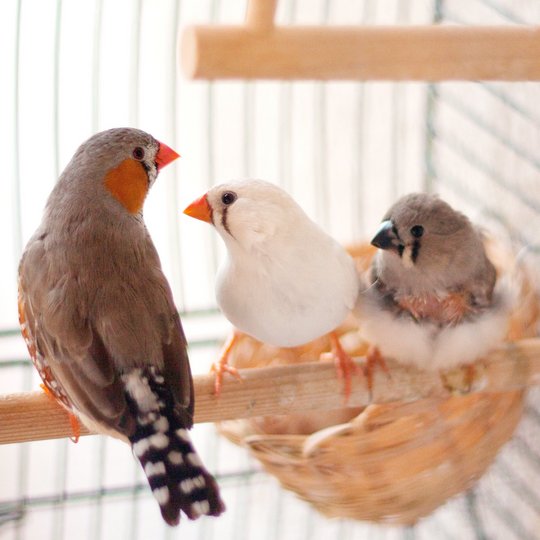
The large group of exotic birds and soft feeders originate from very different areas. The popular zebra finches, for example, are Australian, while the best-known soft feeders - beos and Chinese nightingales (sunbirds) - come from India and the Himalayan region respectively.
The main food of most species is seeds, grains, fruits, insects and fresh green grasses and wild herbs. The living conditions, and above all the food supply, differ significantly from area to area - and the birds have adapted to the food supply of their respective homelands in the course of evolution. In principle, however, the food spectrum is always quite varied.
Vitakraft's varied nutritional program is precisely adapted to these nutritional and physiological needs. The right mixture of high-quality ingredients guarantees an optimal and species-appropriate supply - for a healthy and long bird life.The types of food
Staple food:
A staple food, such as Premium Menu, covers the birds' basic nutritional requirementsKräcker®:
The delicious Kräcker® fulfill several functions at once: The exotic birds have to work for their food just like in nature. This is good against boredom and keeps the animals busy in a species-appropriate way. Pecking also promotes beak careNature Snacks:
Nature Snacks. Healthy treats from VITA NATURE® that support the birds' natural behavior, e.g. pecking seeds from natural millet cobsTreats:
Snacks such as the Bisquiti® provide variety and reward and are a valuable aid in taming and habituationNutritional supplements:
Supplements such as Vita Fit® Mineral serve to strengthen and build up the body. They help to cover requirements in special life situations, e.g. during growth, after illness, for particularly active animals, during breeding, etc.Feeding tips
- Change the food daily or remove the empty grain husks from the food bowl or dispenser, fill up with new food
- Special Kräcker® for exotic birds for species-appropriate nibbling and pecking - for natural activity and beak work
- Feed a varied diet
- Provide fresh drinking water daily
- Offer fresh fruit
-
What do I need to bear in mind regarding the behavior and acclimatization of exotic and soft-bodied fish?
Behavior
The exotic and soft-bodied group includes very different species, some of which are very open and curious, while others are rather shy and reserved. It is particularly interesting to observe the behavior of the more shy species in the group. But ultimately every animal is an individual - and many a bird has been able to amaze its owner with its unusual character.
The new "family member"
In the first few days, a bird needs a lot of rest to get used to its new surroundings. In order to disturb it as little as possible, the bird's home should be well prepared. You can stay close to the bird after it has moved in and keep talking to it in a gentle voice. However, it is better to give it at least one day's rest first.
You can tell by its behavior whether the bird has already settled in: If it picks a few grains from the bowl or cleans itself extensively, it already feels at home in its new home.
As all pet birds are sociable animals, they should only be kept in the company of conspecifics. Animals that are strangers to each other need some time to get used to each other. It is better to keep a close eye on the animals!How exotic and soft-bodied birds become tame
Some species in this group of birds, e.g. many finches, do not become as tame as parakeets. Nevertheless, our aim is for the animals to lose their shyness towards humans in order to achieve harmonious coexistence.
After about a week, a new animal will have settled in a little and you can gradually familiarize the bird with the human hand. The best way to do this is with a treat, e.g. with VITA NATURE® natural millet. Hold the millet calmly in the cage and talk to the bird in a calming manner. After a short time, the bird will usually approach curiously to nibble on the treat. This process should be repeated regularly - so that the animal learns that the hand only brings it good things. -
How do I keep and care for exotics and soft feeders correctly?
All pet birds are sociable animals. If you talk and play with them a lot, some species become quite trusting. However, as humans cannot completely replace a conspecific, the birds only feel comfortable in the company of other conspecifics. Socialization does not detract from their trustfulness and sociability towards humans.
Grooming
The birds groom their plumage thoroughly several times a day. They also enjoy an occasional bath. As a rule, they do not need human help with grooming.
Beak care
A sharpening stone and a strong natural branch should always be available to the birds. Sharpening is an important part of beak care. With the mineral stone Vita Fit® Mineral mineral stone provides vital minerals, trace elements and natural lime.
Claw care
If the birds have rough natural branches with a large diameter in their home, their claws will wear off naturally. However, if the claws become too long, they need to be shortened from time to time. Your pet shop, breeder or vet will be happy to show you how to do it properly.
Moulting
The need for vitamins, minerals and nutrients is particularly high during the moulting period. Supplementary products such as Vita Fit® Moulting Aid and Vita Fit® Mineral provide additional nutrients and active ingredients.
Cleaning the bird house
Depending on the size of the bird house and the number and size of the birds, the sand should be changed about once or twice a week. The floor should also be hot-washed once a week. The perches and toys should also be wiped down with a brush or damp cloth and the food and water bowls thoroughly cleaned with hot water.
Once a month, it's time for a big clean, including a hot rinse of the lattice. But please do not use strong household cleaners! -
What do I need to consider when purchasing and equipping exotic and soft-bodied animals?
Keeping exotic and soft-bodied birds can be a lot of fun - because they are really special and magnificent animals. If you pay attention to a few important points before the birds move in, nothing stands in the way of a long-lasting friendship. For example, a balanced diet and a suitable bird house are important.
Checklist for the initial equipment:
- A spacious bird house
- Perches with different circumferences for foot exercise (at least thick enough so that the bird cannot reach all the way around them)
- Unsprayed natural branches for perching and climbing
- Toys to keep them occupied
- A nest and nesting material if necessary
- Bathing house for daily refreshment
- Bird sand, for example Premium SANDY with lime and important minerals
- Feeding bowl or feeder, filled with staple food such as Vitakraft Premium menu
- Bird drinker with fresh drinking water or Vita Fit® bird drinker
- Mineral stone, e.g. Vita Fit® Mineral for mineral supplementation and beak care
- Kräcker® for exotic birds for beak care and species-appropriate variety
The right location for the bird house
Birds love company - a bright, sheltered corner in the living room can therefore be the ideal location for the bird house. From an elevated position, the birds can keep a close eye on what is going on around them. Spacious outdoor or indoor aviaries are also particularly attractive.
- Birds are sensitive to draughts and bright sunlight, so the bird house should not be too close to a window. Our pet birds also do not tolerate extreme temperature fluctuations.
- There are many dangers lurking in the kitchen, e.g. hot hobs and toxic cleaning agents.
- Birds like fresh air. In summer, you can set up an aviary in a corner of the balcony or garden that is sheltered from the sun and wind.
-
How much space do exotics and soft feeders need?
For species-appropriate keeping of finches and soft-feeders, it is important to ensure that the birds get enough exercise when kept indoors. They need large birdhouses or aviaries in which the perches are positioned so that the birds can also fly around inside their housing. As these pet birds are very sociable, they should be kept at least in pairs in order to feel comfortable. In general, regular free flight is also recommended in the home to keep the birds healthy and lively. To make it easier to lure the birds back into their home after free flight, they should only be fed there. Some species are also suitable for keeping in an outdoor aviary.
Discover our offer for birds
Main feed, snacks & supplements and supplies
Discover our offer for birds
Main feed, snacks & supplements and supplies