TABS

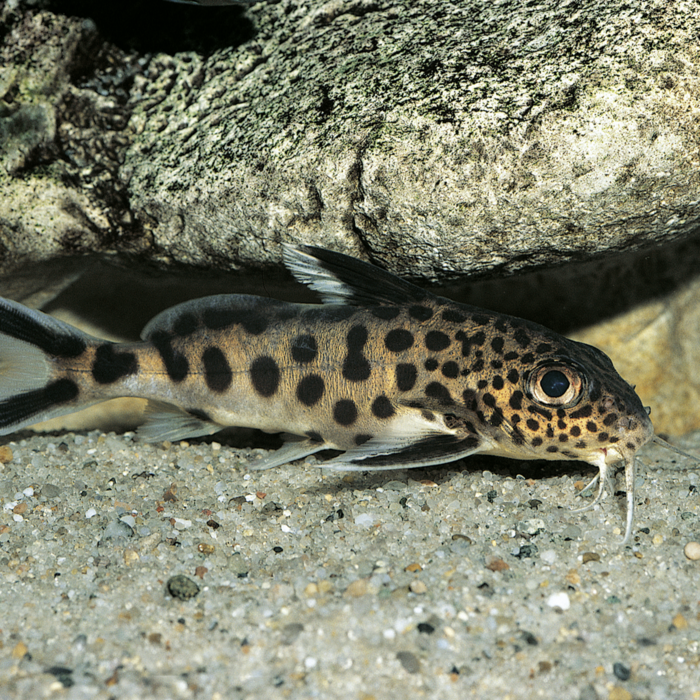
Ideal for all bottom feeders.

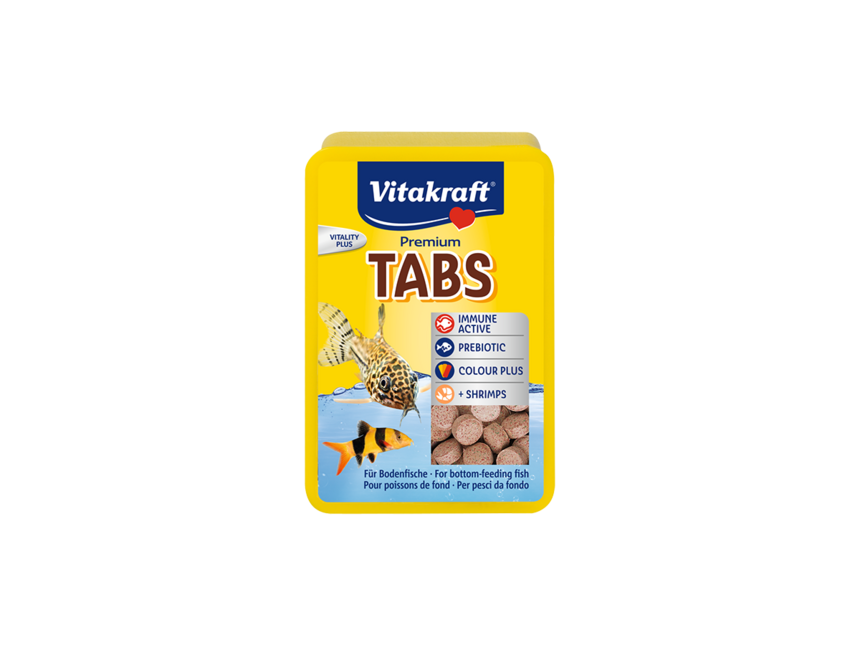
The sinking Vitakraft® TABS with valuable shrimps.

The complete food was specially developed for feeding catfish and other bottom-feeding ornamental fish and guarantees the animals a comprehensive supply of all important nutritional components - for vitality and colorfulness!

Get to know the advantages

Packshot Tabs

Vitakraft® TABS

Fisch Tabs
Declining Tabs

Perfect for all bottom-feeding fish.

Immune active

Vitakraft® TABS contain beta glucans, multivitamins and long-term stable vitamin C to strengthen the immune system.

Color plus

The special ingredient astaxanthin promotes the colorfulness of the fish.

Supporting prebiotic

The prebiotic it contains supports the intestinal flora and optimum feed conversion.

Explore our range ...

Product-Image for TABS

Aquarium fish guide

Show all answers
Hide all answers
  • Acquisition & equipment

    It is not without reason that aquarium keeping is one of the most beautiful and versatile hobbies. You can observe a small ecosystem up close, get to know the behavior of the different fish species and be fascinated by their exotic colors. In addition, there are many opportunities to implement your own design ideas when setting up the aquarium.

    First steps

    The freshwater aquarium

    Among freshwater aquariums, the so-called community tank is the most common. Various species of ornamental fish, usually tropical, and different plants with similar requirements are kept in these tanks. In contrast, fish of one or more closely related species (e.g. mbuna cichlids) live in a species tank.

    Checklist for the equipment

    • Aquarium with cover and fluorescent tube
    • Aquarium substrate, e.g. polystyrene sheet (approx. 0.5 - 1 cm thick) or soft rubber
    • substrate
    • Decoration: stone wood, perforated rock etc., aquarium roots and aquatic plants
    • Filter: internal or external filter with filter substrate
    • Regulator heater and aquarium thermometer
    • Algae magnetic disk cleaner or sponge (special)
    • Water conditioner and filter bacteria
    • Hose for water changes
    • 10-liter bucket used exclusively for aquarium maintenance
    • Timer for the aquarium lighting
    • Food suitable for the selected fish species

    The right location

    The location for the aquarium should be chosen so that the fish can be observed from a comfortable place. However, direct sunlight can promote algae growth and heat up the water too much in summer. It is therefore better not to place the aquarium too close to a window.
    The load-bearing capacity of the location must be included in the planning, especially for larger tanks. Even small tanks have a considerable weight: one liter of water weighs 1 kg, plus substrate, stones and other decorations ... This can quickly add up to more than 80 kg! The safest way to store an aquarium is therefore on a special aquarium base cabinet that takes this weight into account in the static structure.
    The aquarium should be placed on a polystyrene base or another special base. This compensates for any minimal unevenness in the storage surface.

    Setting up the tank

    The aim of setting up the aquarium is to create a species-appropriate habitat for fish and plants. The desired "biological balance" depends on an intact interplay between fish, plants, water, microorganisms and the technical equipment.

    The most important steps at a glance

    1. substrate and decoration

    Mix about a third of the substrate washed with clear water (no turbidity should remain in the water after rinsing) with a little nutrient substrate and spread evenly over the bottom of the tank. Add the remaining substrate on top. In total, the bottom of the tank should be covered with approx. 3 - 6 cm of substrate, rising towards the back. All decorative objects such as stones, roots etc. should be scrubbed off with clear, hot water and pressed into the gravel. For fish that rummage through the substrate, make sure that the structure stands firmly on the aquarium floor and that nothing can tip over (fix with silicone if necessary)! A round-grained substrate is also preferable for such animals.
    The tank is then filled to about one third with tempered tap water, which has previously been treated to suit the fish. The water values must be checked regularly, depending on the needs of your future fish.

    2. introducing the aquatic plants

    Before planting, you should remove the plant substrate adhering to the roots and shorten the roots of the plants by about a quarter using scissors. Fast-growing stem plants (e.g. hair moss) are ideal as background plants. They are pressed into the substrate and weighted down with a pebble. In the central area, individual rosette plants that grow in width, such as the Amazon sword plant, look particularly beautiful. To plant, simply drill a hole in the gravel with your finger and insert the plant.
    To avoid blocking the view of the fish, only small plants such as the small spear leaf should be used for the foreground. The so-called perching plants also look very decorative in the foreground. They are attached to stones or roots with a nylon thread, which can also be used to tie in Java fern, for example.

    3. attach the filter and control heater

    Note: Always unplug technical devices from the mains before reaching into the water!
    Now fill the aquarium with treated tap water to about 3 - 4 cm below the rim. Then attach the control heater to one of the rear corners of the aquarium using suction cups. In the other corner, attach the internal filter filled with filter material or - if using an external filter - the intake pipe. The corresponding diffuser is mounted horizontally at water level on the rear aquarium pane or on the side.
    The thermometer is attached to the front or side aquarium pane so that the water temperature can be checked at any time. Most tropical ornamental fish species prefer temperatures around 20 - 28°C. Ask your pet shop about the exact requirements of the respective fish species.

    4 Starting up the aquarium

    Once all the technical equipment has been connected, the cover can now be carefully placed on the tank. The filter, heater and lighting are then connected to the power circuit. A timer ensures a regular lighting period of 10 - 12 hours.

    5. running-in phase

    Very important: The fish should only be introduced after a "running-in phase" of around 3 - 4 weeks. During this time, the valuable microorganisms form both in the filter media and in the substrate. They ensure the breakdown of pollutants and the biological balance in the aquarium. This process can be effectively supported by "inoculating" the filter media with filter bacteria.

    6. selection of fish

    After 3 - 4 weeks of the running-in phase, a suitable habitat for the fish has been created in the aquarium. The following considerations must be taken into account when selecting the inhabitants:

    • The fish species must match in terms of their behavior as well as their requirements in terms of water quality and diet
    • The water values can be checked using a test kit from a pet shop (more on this under "Fish-friendly water treatment and partial water changes")
    • Each fish species lives in a preferred water region. The aquarium looks most lively when the upper, middle and lower water regions are inhabited
    • As a guideline, a maximum of 1 cm of fish per 4 liters of water is recommended. A more densely populated tank tends to cause fluctuations in the water values, over-fertilization and increased algae growth, for example, and carries an increased risk of disease for the fish

    7. introducing the fish into the aquarium

    The ornamental fish should be introduced carefully to avoid "transfer shock". The transport bag should therefore be placed in the tank first to adjust the temperature and water conditions. No water should flow in or out and care must be taken to ensure that the bag is not under the lights.
    After around 15 minutes, one third of the transport water is replaced with aquarium water or topped up accordingly. This process is repeated twice after a further 15 minutes. The fish are then carefully placed in the aquarium using a net. As the transport water may contain medications and microorganisms to which the small aquarium ecosystem is not adapted, it should always be poured away.

  • Keeping & care

    The quality of the aquarium water determines the quality of life of the ornamental fish. Only if the biological and water chemistry processes in the water function properly will the fish remain healthy and happy. The aim of aquaristics is therefore to ensure a biological balance in the aquarium through regular care measures.

    Fish-friendly water treatment and partial water changes

    Lakes and rivers clean themselves through natural currents and water exchange. In an aquarium, however, natural purification processes can only be effective to a limited extent. Therefore, powerful filter technology is required and a partial water change should be carried out regularly to reduce the pollutants dissolved in the water.
    Exotic ornamental fish have adapted their organisms to the living conditions in their waters of origin. To ensure that they also find these conditions in the aquarium, the water is treated when the aquarium is set up and also during regular partial water changes. The addition of Aqua-Bon® 6 in 1 water conditioner binds heavy metals and transforms normal tap water into aquarium water suitable for fish. This protects the sensitive gills and mucous membranes of the fish.

    Degradation of pollutants through optimum filtration

    Permanent filtration, together with partial water changes, is the most important prerequisite for clean and clear aquarium water. The filter system cycle is divided into two stages, each of which uses specific filter materials.

    • Mechanical filtration (pre-filtering) removes organic residues such as dead plant parts, food residues and fish excrement. Large particles should not enter the filter in the first place!
    • Biological filtration (post-filtering) is carried out by microorganisms that settle in the pores of the filter materials.

    During biological filtration, microorganisms convert nitrogen compounds, e.g. the waste products of protein digestion, into non-toxic nitrate via various intermediate stages. In the first step, non-toxic ammonium (NH4+) or, at pH values above 7.5, toxic ammonia (NH3) is formed.

    In the next stage, ammonium or ammonia is broken down into nitrite (NO2), which is also toxic, and finally into nitrate (NO3). Nitrite is very harmful to fish. Nitrate is less toxic, but as a plant nutrient it can promote algae growth. Excessive nitrite or nitrate levels can be quickly reduced by a partial water change. In the long term, the sources should be identified and reduced.

    In order to avoid contamination of the water and thus endangering the health of the fish and due to their high toxicity, these pollutant values should be checked regularly, as should the other water values.

    Testing and adjusting the water values

    Depending on the water of origin, each fish species has its own requirements regarding the hardness and pH value of the water.
    Most freshwater fish require a carbonate hardness of 3° - 12° dKH (= German carbonate hardness) and soft to medium-hard water with a total hardness of 4° - 14° dGH (= German total hardness). The carbonate hardness is also important for the stability of the pH value and should never fall below 3° dKH.

    The pH value indicates the acidity of the water: Values below pH 7 are acidic, values above this are basic (or alkaline). The cichlids of the East African lakes, for example, require an alkaline pH value of around 8, whereas the dwarf cichlids of the Amazon region live in waters with acidic pH values of up to 5.5.

    Regular care and cleaning

    The maintenance of an established aquarium does not take much time - if it is carried out regularly:

    • Daily: Check the technology and temperature. Observe the behavior and appearance of the fish (changes may indicate disease)
    • Approx. every 14 days: Check water values (pH, hardness, NO2, NO 3) before the partial water change. Then, depending on the fish population, replace 10 - 30% of the aquarium water with tap water that has been adjusted to the aquarium water temperature and treated to suit the fish. Clean the aquarium glass with an algae magnetic cleaner beforehand
    • Plant care: Cut off 2/3 of fast-growing stem plants that are already growing along the water surface with sharp scissors

    Filter care: Clean the mechanical filter section during partial water changes. Carefully rinse the biological filter mass with aquarium water (never with cold tap water!) only about every 3 months so that the valuable microorganisms are not destroyed.

  • Nutrition

    The basics of nutrition

    The tropical and subtropical waters of origin of freshwater fish provide all essential food components in natural diversity. The food mainly comes from the underwater habitat, e.g. mosquito larvae, daphnia, tubifex and plant food (algae growth). But food also enters the water from outside: insects, fallen flowers, berries, etc.

    Nutrition in the aquarium

    Over the course of evolution, each fish species has adapted to the special food available in its natural habitat. The diet in the aquarium should therefore follow nature's example and provide the fish with all the necessary food components in the required quantities and combinations. At the same time, the water quality must not be polluted with superfluous nutrients.

    We also know different food specialists in fish - sometimes even within a fish family. There are predominantly herbivorous fish, predatory fish and omnivores. The majority of commonly kept aquarium fish are omnivores.

    The Vitakraft ornamental fish food concept follows the path of nature and fully meets the nutritional and physiological requirements of the respective fish species. The food also achieves the best possible nutrient utilization and thus prevents unnecessary water pollution through excretion.

    Species-appropriate food - and its properties in the water

    Each fish species lives in a preferred water region, in which the food is consumed accordingly. Bottom-dwelling catfish, for example, have a lower mouth with which they can pick up food from the bottom. Fish in the upper water regions (hatchet-bellied tetras, guppies) are so-called surface feeders with an upper mouth. The fish in the middle regions have a terminal mouth.

    The food must have swimming, sinking or floating properties, depending on the species-specific feeding habits of the fish. The aroma of the food is also important, as the fish are guided by their sensitive olfactory organs when finding food. Vitakraft ornamental fish food takes into account the different requirements of the respective aquarium inhabitants due to its special composition.

    The building blocks of nutrition

    • Fats are the main source of energy and are therefore necessary for building up energy reserves. Vitakraft ornamental fish food contains fish oil, among other things, to provide the fish with important essential unsaturated omega-3 fatty acids.
    • Some fish can also use carbohydrates as an energy source. From a biochemical point of view, carbohydrates also include fiber, which plays an important role in healthy digestion, especially in herbivorous fish.
    • Proteins (proteins) with their amino acids are the basis of building metabolism and enable, among other things, muscle development, growth and the development of other tissues. Vitakraft ornamental fish food contains a precisely dosed composition of proteins and thus essential amino acids.
    • Vitamins in a quantitatively and qualitatively sophisticated composition support the body's own protective functions against diseases and are vital for various metabolic processes.
    • Vitakraft ornamental fish food contains Immune Active, a specially developed combination of beta glucans, multivitamins and long-term stable vitamin C to strengthen the body's defenses.
    • Colorants (such as astaxanthin) are required by the fish for species-specific coloration, which fulfills important behavioural tasks. In addition to intra-species communication, the intense coloration of ornamental fish also delights onlookers outside the aquarium.

    Feeding tips

    • It is best to feed small amounts once or several times a day - no more than the fish can consume within a few minutes.
    • Ensure a varied diet - this applies in particular to community tanks.
    • Do not feed directly after maintenance measures (such as water changes or cleaning the glass).
  • The right location

    The location for the aquarium should be chosen so that the fish can be observed from a comfortable place. As an attractive focal point, the aquarium will brighten up any room.

    Do not place the aquarium too close to a window. Direct sunlight can promote algae growth and heat up the water too much in summer.

    For a larger tank, the load-bearing capacity of the location must also be taken into account when planning.

    The aquarium should be placed on a polystyrene base or other special base. This will compensate for any minimal unevenness in the surface.